
A growing body of research indicates that dance is an effective activity for supporting healthy ageing because it simultaneously engages physical, cognitive, emotional and social aspects of wellbeing. Research has shown that dance can positively impact several chronic health conditions (Bruyneel 2019). The research evidence is particularly compelling because dance is one of the few activities that combines physical exercise, cognitive challenge, emotional expression and social connection in a single enjoyable experience, making it especially suited to supporting health and wellbeing in later life.
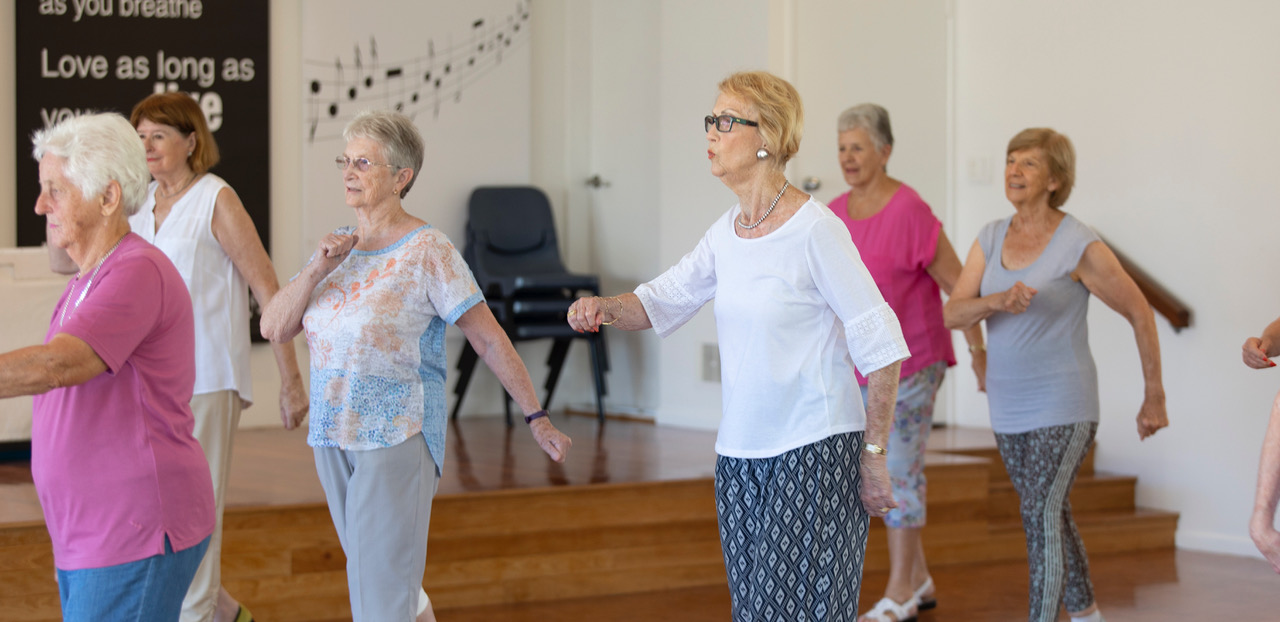
Research has consistently demonstrated that dance can improve balance, mobility, strength and physical function in older adults (Hwang et al., 2015). Dance-based activities can improve physical function and reduce falls risk among healthy older adults (Mattle et al., 2020). Other reviews have reported improvements in balance, gait, coordination and overall functional ability, helping older adults maintain independence and confidence in everyday activities (Liu et al., 2021).
Dance provides a unique combination of physical movement, rhythmic synchronisation, memory recall, attention and decision-making. A systematic review found that dance interventions improved global cognitive function and executive function in adults aged 55+ years (Hewston et al., 2021). Additional reviews have concluded that dance can help maintain or improve cognitive performance and may support neuroplasticity (Rehfeld et al., 2018) – the brain’s ability to form new neural connections as people age. Another review suggests dance can improve and help maintain cognition (Predovan et al., 2019). The multi-factorial nature of dance results in numerous regions of the brain being activated at the same time. This is known as neural synchrony. (Basso et al 2021).
Research indicates that dance can positively influence mood, emotional wellbeing and mental health. Systematic reviews and meta-analyses found that dance can improve psychological wellbeing and reduce symptoms of depression in older adults (Mattle et al., 2024) and that dance is equivalent or superior to other physical activity interventions to improve psychological wellbeing (Fong Yan et al., 2024). The combination of movement, music, creativity and achievement appears to contribute to increased enjoyment, self-confidence and emotional resilience.
Dance is inherently social and provides opportunities for meaningful interaction, shared experiences and community participation. Studies have found that participation in dance programs can reduce feelings of loneliness and social isolation while fostering a sense of belonging and connection. Researchers suggest that the social engagement created through dance is one of the key factors contributing to its overall health benefits and sustained participation among older adults. Dancing in synchrony whether in person or online together can enhance feelings of social connection. (Basso & Tasnim, 2024).
Research articles
Texts
Read anecdotal evidence of testimonials from our participants, allied health and care professionals who have engaged with us.